
Imagine intelligence not as circuitry or synapses, but as a grand stage play. On this stage, each character attempts to perform convincingly enough that the audience forgets that any costume exists at all. In the world of machines, the Turing Test is this stage. Instead of props and curtains, there are words and responses. The audience is the human judge, listening carefully for slips in tone, timing, or meaning. The question is not whether the machine knows, but whether it performs the role of a thinker well enough to be mistaken for one. This idea often draws interest from learners and professionals, whether they discover it in computer science studies or during discussions in an AI course in Pune where the history of machine intelligence is explored with curiosity.
The Curtain Between Human and Machine
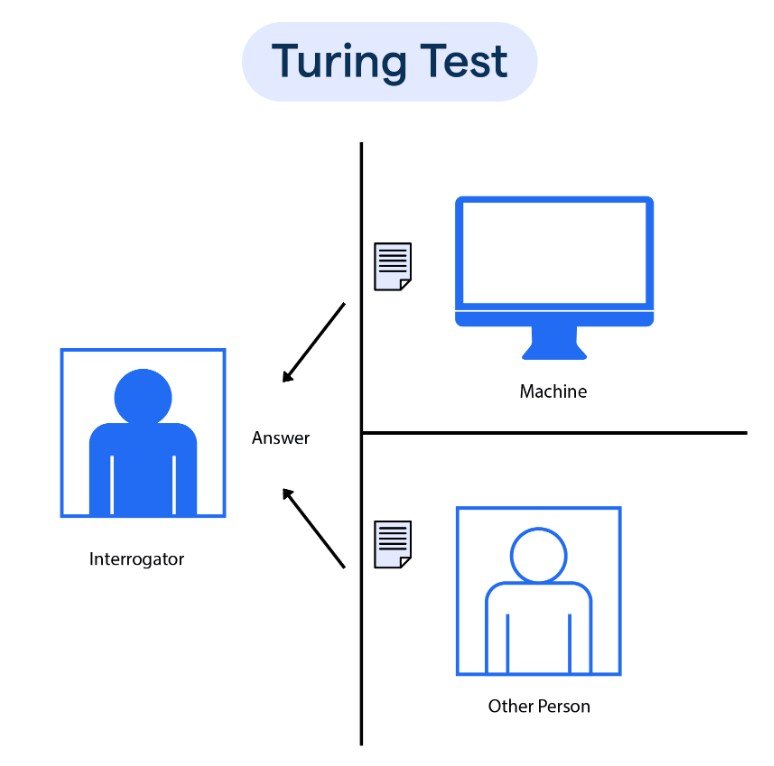
Alan Turing proposed the test in 1950 as a playful yet profound experiment. He imagined a conversation behind a wall, where one participant is a person and the other a machine. The judge on the outside has only language to lean on. They ask questions, receive answers, ask again. No body language. No vocal tone. Just text. If the judge cannot reliably tell who is human and who is not, the machine is said to have passed.
This is a bit like a masked ball where identity is hidden, and only rhythm, wit, and conversational texture reveal character. The test does not ask whether the machine understands. It asks whether the illusion of understanding is convincing enough.
Language as the Theatre of Thought
Conversation is not just the exchange of data. It is the dance of ideas, assumptions, feelings, and subtle cues. When humans speak, we reveal fragments of our inner stories. For a machine to respond in a way that feels human, it must mimic these layers. Not just provide correct answers, but answer in the right tone, with the right level of context, at the right moment.
Machines that attempt this feat draw from patterns, probabilities, and vast training examples. They do not know joy or irony, but they recognize when humans typically use words that express them. The Turing Test invites us to reflect not only on what machines can do, but on what we are doing when we communicate. We realize how much of conversation is habit, pattern, and rhythm rather than raw originality.
The Challenge of Deception and Authenticity
One of the central criticisms of the Turing Test is that it rewards imitation rather than intelligence. A machine could pass simply by mimicking human conversational errors, rambling slightly, or dodging difficult questions. It is possible to seem human without possessing real insight.
In this way, the test mirrors a philosophical question: is intelligence the appearance of understanding, or the experience of it? Humans often judge intelligence through expression. If someone speaks eloquently, we assume depth. If someone hesitates or phrases oddly, we assume confusion. The Turing Test highlights how dependent we are on surface-level cues.
The Relevance in Modern AI Systems
Today, we interact with systems that can carry conversations, generate essays, write poetry, translate languages, or answer complex questions in real time. Large language models and conversational agents have made the boundary between human and artificial responses thinner and more permeable than ever. Discussions in specialized learning environments such as an AI course in Pune often emphasize how modern systems no longer aim simply to pass the Turing Test. They aim to be useful, adaptive, and context-aware.
While some systems may pass fragments of the test effortlessly, the goal has shifted from imitation to alignment. Modern research focuses on how to make AI respond responsibly, avoid harm, respect social norms, and adapt to varied human needs.
Beyond the Turing Test: New Measures of Intelligence
The Turing Test does not measure creativity, emotional depth, common sense, or moral judgment. A machine might pass the test yet fail to understand simple cause-and-effect relationships or misunderstand a joke that every child grasps with ease. Modern benchmarks now evaluate whether systems can reason, solve real-world tasks, collaborate with people, or respond safely under uncertainty.
We have moved from asking whether machines can sound human to asking whether machines can support human goals meaningfully. Intelligence is shifting from illusion to collaboration.
Conclusion: The Stage Continues to Evolve
The Turing Test remains a historical milestone, a mirror that reflects our own assumptions about communication and thought. It reminds us that intelligence is not just knowledge, but the ability to express it in relatable form. Even as AI grows far beyond Turing’s original imagination, the test continues to challenge us to define what it means to think, understand, and connect.
Perhaps the enduring lesson is that humans and machines are both performers in the grand play of language. The difference is that humans speak from lived experience, while machines speak from patterns. The closer these performances align, the more intriguing the story becomes.
