
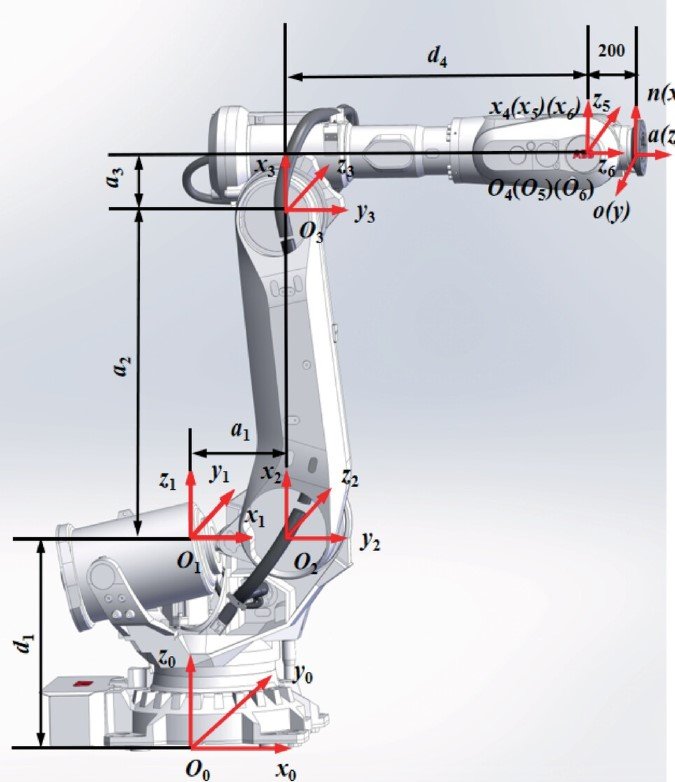
As robots move from controlled factory floors into dynamic real-world environments, their ability to navigate safely becomes a defining capability. Whether it is an autonomous warehouse robot, a surgical assistant, or a self-driving vehicle, avoiding collisions is not simply about reacting to obstacles at the last moment. Instead, it requires anticipating every possible robot configuration and planning paths that remain safe throughout motion. Configuration-space-based collision avoidance provides a structured mathematical and computational approach to this challenge, enabling robots to reason about movement before it occurs rather than correcting mistakes after they occur.
Understanding Configuration Space in Robot Motion Planning
Configuration space, often called C-space, is a conceptual model that represents all possible positions and orientations a robot can take. Rather than viewing obstacles only in the physical environment, this approach transforms them into restricted regions within the robot’s configuration space. Each point in this space represents a unique pose of the robot.
For a simple robot, configuration space may be two-dimensional, representing its position on a plane. For articulated robots with multiple joints, the space expands into higher dimensions, with each joint contributing an additional axis. By shifting the problem from physical geometry to mathematical space, robots can reason about motion more precisely. This abstraction is a core concept taught in advanced robotics and autonomy modules often included in an ai course in chennai, where learners explore how spatial reasoning underpins intelligent behaviour.
Modelling Obstacles as Forbidden Regions
In configuration space planning, obstacles are not treated as physical objects alone. Instead, they are transformed into forbidden regions where the robot’s configuration would result in a collision. This transformation accounts for the robot’s shape, size, and degrees of freedom.
For example, when a robot arm operates near a wall, the wall’s presence translates into a complex boundary in configuration space. Any configuration that causes the arm to intersect the wall becomes invalid. By mapping all such invalid configurations, the planner creates a clear separation between safe and unsafe regions.
This modelling allows collision avoidance to happen before movement begins. Instead of checking collisions repeatedly during motion, planners can pre-calculate paths that remain entirely within safe regions of the configuration space.
Path Planning Techniques Using Configuration Space
Once the configuration space is defined, path planning becomes a search problem. The objective is to find a continuous path from a start configuration to a goal configuration without entering forbidden regions. Various algorithms are used for this purpose, depending on the complexity of the space.
Grid-based methods discretise configuration space and apply search algorithms to find feasible paths. Sampling-based planners, such as probabilistic roadmaps and rapidly exploring random trees, are particularly effective in high-dimensional spaces. They sample valid configurations and connect them to build navigable graphs.
These planners do not merely avoid obstacles. They optimise for smoothness, efficiency, and feasibility, ensuring that the planned motion respects physical constraints like joint limits and velocity bounds. Understanding these techniques is essential for anyone designing intelligent robotic systems, and they are frequently explored in depth within an ai course in chennai focused on robotics and autonomous systems.
Advantages Over Reactive Collision Avoidance
Reactive collision avoidance relies on sensors and real-time corrections to avoid obstacles. While useful, this approach can struggle in cluttered or fast-changing environments. Configuration space planning offers several advantages.
First, it provides predictability. Paths are planned in advance, reducing uncertainty during execution. Second, it scales well to complex robots with many joints, where reactive methods may fail to consider all constraints. Third, it supports integration with higher-level planning, allowing robots to reason about tasks and motion together.
By pre-calculating safe paths, robots can move more smoothly and efficiently. This is especially important in applications like manufacturing or healthcare, where precision and safety are critical.
Challenges and Practical Considerations
Despite its strengths, configuration space planning is computationally demanding. As the number of degrees of freedom increases, the space grows exponentially. This makes exact modelling and exhaustive search impractical for very complex robots.
To address this, modern systems combine configuration space planning with heuristics, approximations, and learning-based methods. Hybrid approaches use configuration space for global planning and reactive methods for local adjustments. Advances in computing power and algorithms continue to push the boundaries of what is feasible in real time.
Another challenge is accurate modelling of the environment. Configuration space planning assumes reliable information about obstacles. In uncertain or dynamic environments, planners must be updated continuously to remain effective.
Conclusion
Collision avoidance using configuration space represents a foundational technique in intelligent robot motion planning. By modelling all possible robot positions and transforming obstacles into forbidden regions, it allows robots to plan safe, efficient paths before movement begins. Although computational challenges remain, advances in algorithms and computing continue to make this approach practical for increasingly complex systems. As robots become more autonomous and integrated into everyday environments, configuration space based planning will remain central to ensuring safety, reliability, and intelligent behaviour.
Business Name: ExcelR – Data Science, Data Analyst Course Training
Address: 1st Floor, East Court Phoenix Market City, F-02, Clover Park, Viman Nagar, Pune, Maharashtra 411014
Phone Number: 096997 53213
Email Id: enquiry@excelr.com
